
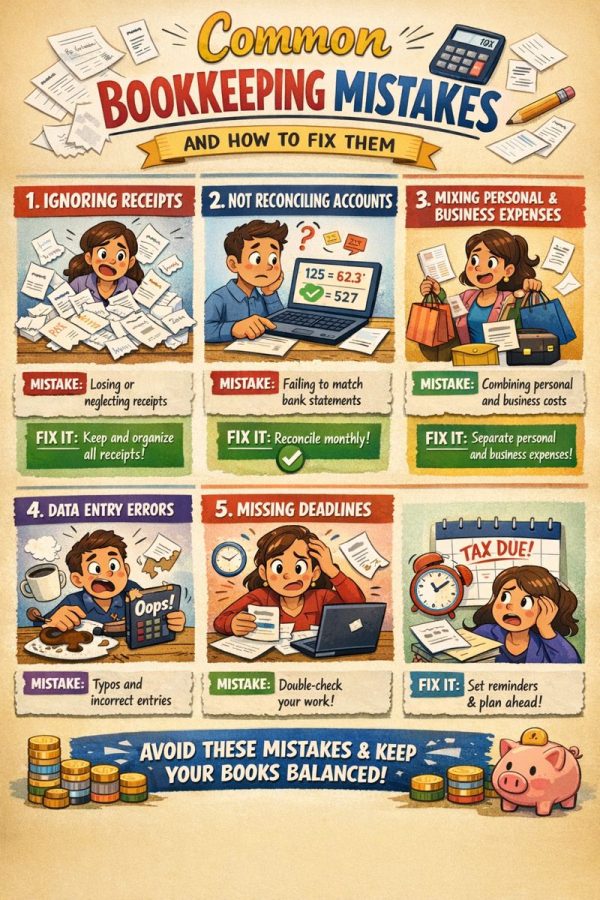
Keeping your books in order doesn’t have to feel like doing taxes in a dark cave. Whether you’re a small business owner, freelancer, or side hustler, avoiding common bookkeeping mistakes can save you time, money, and stress. Let’s break down the most frequent slip‑ups—and exactly how to fix them.
1. Mixing Personal and Business Finances
The Mistake: Using one bank account or credit card for everything.
Why It’s a Problem: It creates confusion, makes taxes harder, and increases the risk of missing deductions.
How to Fix It:
- Open a dedicated business checking account
- Use a business credit card for expenses
- Pay yourself via owner’s draw or payroll
2. Not Keeping Receipts
The Mistake: Tossing receipts or assuming bank statements are enough.
Why It’s a Problem: The IRS requires proof for deductions, and missing receipts can cost you money.
How to Fix It:
- Use receipt‑scanning apps
- Store digital copies in cloud folders
- Attach receipts directly to transactions in your bookkeeping software
3. Falling Behind on Bookkeeping
The Mistake: Waiting until tax time to update your books.
Why It’s a Problem: Errors pile up, reports are inaccurate, and stress skyrockets.
How to Fix It:
- Schedule weekly or monthly bookkeeping time
- Automate bank feeds
- Hire a bookkeeper if time is tight
4. Misclassifying Expenses
The Mistake: Putting expenses in the wrong category.
Why It’s a Problem: This leads to inaccurate reports and missed tax deductions.
How to Fix It:
- Use a standard chart of accounts
- Review categories monthly
- Ask an accountant when unsure
5. Ignoring Bank Reconciliations
The Mistake: Assuming your books match your bank balance.
Why It’s a Problem: Errors, duplicate entries, and fraud can go unnoticed.
How to Fix It:
- Reconcile accounts monthly
- Compare every transaction
- Investigate discrepancies immediately
6. Forgetting About Sales Tax
The Mistake: Not tracking or setting aside sales tax.
Why It’s a Problem: You may owe more than expected—and penalties add up fast.
How to Fix It:
- Track sales tax separately
- Set reminders for filing deadlines
- Use accounting software with sales‑tax automation
7. DIY‑ing Everything for Too Long
The Mistake: Handling complex bookkeeping without professional help.
Why It’s a Problem: Small errors can turn into expensive problems.
How to Fix It:
- Consult a professional accountant
- Outsource monthly bookkeeping
- Schedule quarterly financial reviews
Final Thoughts
Good bookkeeping isn’t about perfection—it’s about consistency. By avoiding these common mistakes and putting simple systems in place, you’ll gain clearer insights, better cash flow, and peace of mind.
📌 Pro Tip: If bookkeeping feels overwhelming, it may be time to let a professional handle it so you can focus on growing your business.


